Director’s Introduction
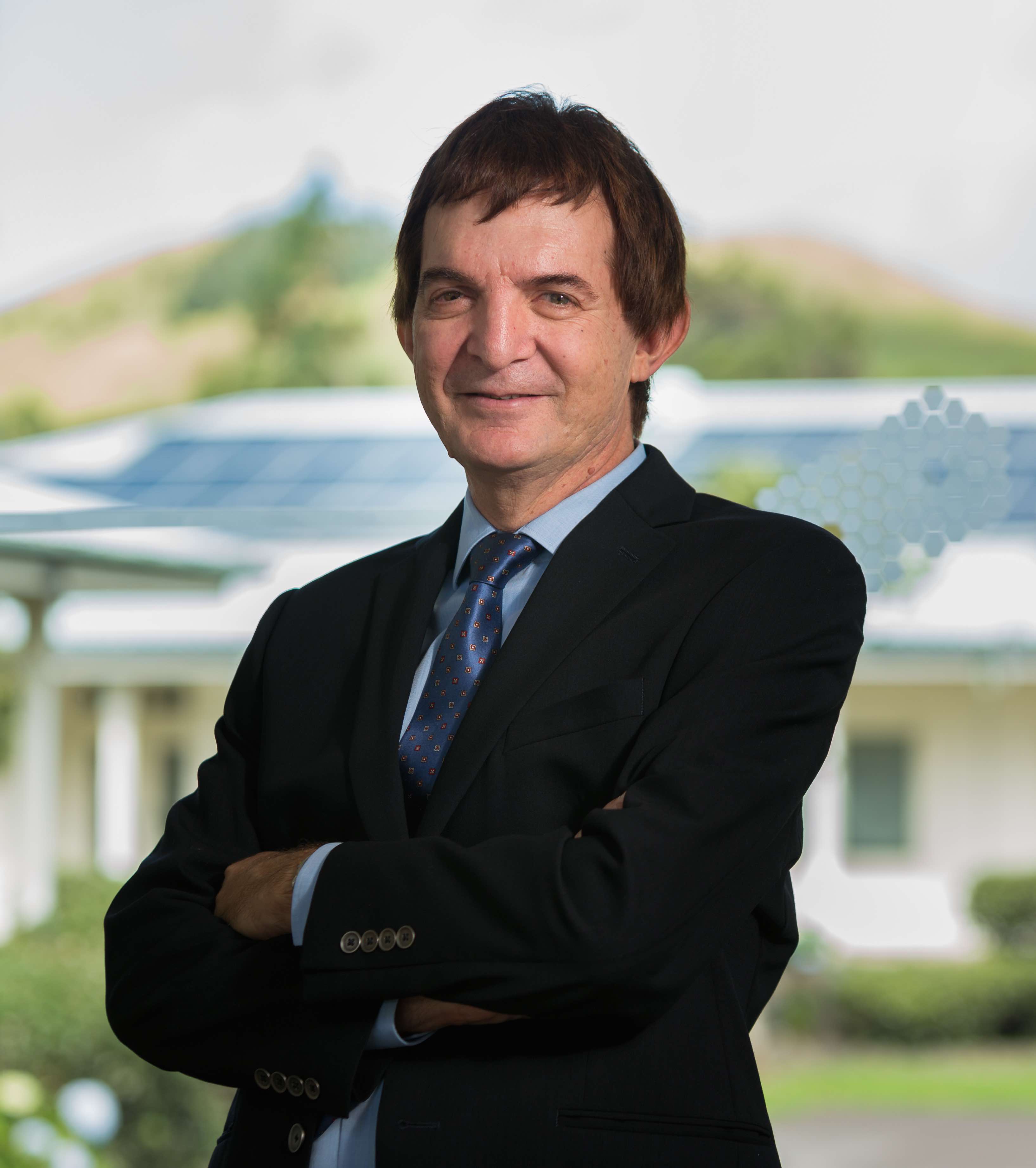
Hilton Lewis, Director, WMKO
 Aloha and welcome to the winter edition of the Observers’ Newsletter. Since we last reported, there has been important progress on activities and new initiatives at the Keck Observatory.
Following an international search, I was appointed Director of the Observatory in October 2104, having served as the Interim Director since last May. It is a great honor and a privilege to serve as the leader of the Keck Observatory. I am fully committed to sustaining its success into the future, and to continuing the extraordinary level of service to the astronomers who use the facility. As part of the leadership transition, we are in the process of recruiting a Chief Scientist to join the leadership team in Hawaii. The person in this position will serve as our ambassador to the global science community, with a particular focus on science policy and scientific strategy. We are hoping to complete the recruitment for this key position within the next few months.
Late in September 2014, we held a Scientific Strategic Planning Meeting in Oxnard California as the initial step in our Strategic Planning process, last performed 4 years before. It is clear that the Keck Observatory (WMKO), though led by the University of California and Caltech, and in part funded by NASA, has become a national and to some extent international facility. Therefore we invited a mix of WMKO community leaders and key representative external participants to the meeting. The theme was “Keck in the era of other facilities: GAIA, ALMA, JWST, LSST and other highly specialized facilities”.
In advance of the meeting, white papers were solicited in the areas of: Keck-GAIA synergies, Cosmography, Galactic Archeology, LSST, Large Surveys, Time Domain Astronomy, Exoplanet research (all approaches), Solar system and NASA mission support, High angular resolution science (including ground layer adaptive optics and other new technologies) and synergies with JWST/EUCLID/WFIRST, Subaru and the TMT. The meeting included talks on specific missions and major scientific and technological developments with ample time allocated for discussion of the white papers. It was clear from the discussions that there are lots of opportunities to sustain our scientific impact, for example in the areas of time domain survey follow-up, space mission support, in the exploitation of new technologies and in closer collaboration with other major astronomy facilities.
The next steps in the strategic planning process are to investigate key areas in greater depth through the use of a small number of task forces, and then to synthesize a new strategic plan. Stay tuned for progress on this important activity. We intend reporting on the new Strategic Plan at the next Keck Science Meeting in October 2015.
In early October 2014, a two-day Keck Science meeting was held at Caltech. The meeting attracted 141 registered participants, with 35 papers and 21 posters. The meeting included a town hall to discuss the outcomes of the Science Strategic Planning meeting, as well as to solicit input on proposals for time allocation in support of time domain astronomy, and new instrument proposals.
Two proposals for funding instrument upgrades have been submitted. In October 2014, a proposal for a Point Spread Function Determination Facility for Adaptive Optics was submitted to the NSF ATI program. This proposal builds on the on-axis and off-axis PSF determination projects conducted at WMKO and UCLA respectively, with the aim of providing a turnkey facility capability for our observers. Then in January 2015, a proposal to upgrade NIRSPEC’s spectrograph and slit-viewing detectors, slit-viewing optics, readout electronics and motion control hardware and software was submitted to the NSF MRI program. This upgrade will replace the existing high read noise, high dark current, low quantum efficiency InSb spectrograph detector with a new 5.3 µm cutoff Hawaii II-RG detector, and the slit-viewing detector with a Hawaii I–RG detector, extending its wavelength cutoff from 2.5µm to 5.3µm. In addition, the upgrade will replace the obsolete transputer-based detector and motion control systems in use today.
In December, a generous gift from the Heising-Simons Foundation completed our philanthropic fund-raising goal for KCWI-Blue. We are now turning our fundraising attention to raising the remaining funds needed for KCWI-Red. As reported in the last issue of the Observers’ Newsletter, the NSF has provided a $4M grant towards the construction of KCWI-Red.
Our annual planning process is now underway. Every year starting in January, we run two parallel processes: one to determine the Annual Plan for the next fiscal year (which runs October to September) and one to update our 5-Year Plan. Input for these plans is solicited from WMKO staff and management, and the WMKO Science Steering Committee (SSC). Both plans are subject to review by the management, the SSC and the Board. This year’s 5-Year Plan will be reviewed at our next SSC and Board meetings in March 2015, while the Annual Plan will be submitted for approval in June.
In the next edition of the newsletter we will report on progress and completion of several major projects currently nearing underway: the Telescope Control System upgrade, the Segment Repair project, the AO laser Center Launch System on Keck II. Stay tuned!
A hui hou kākou – Hilton Lewis, Observatory Director ✶
Keck II Next Generation Laser System
Jason Chin, Senior Electronics Engineer, WMKO
Randy Campbell, Support Astronomer, WMKO
The current Keck II laser will be decommissioned in the fall of 2015 after 11 years of scientific operation. It will be replaced by the TOPTICA Raman fiber laser that was delivered to WMKO in October 2014. The 20 W fiber laser is the third generation of sodium lasers to be installed at WMKO, after the Keck II dye laser and the Keck I solid state laser. TOPTICA partnered with MPBC, a telecommunication company, in the use of Raman fiber technology to improve reliability and efficiency. The result is a highly stable beam with minimal aberration, achieved while consuming only 1 kW of electrical power. Unlike previous technologies the TOPTICA laser is a narrow-line continuous wave laser, producing two distinct sodium wavelengths: D2a and a side band at D2b. The D2b line is used for optical re-pumping of the sodium atoms to improve the sodium coupling efficiency. In addition, highly linearly polarized light is converted to circular polarization for additional coupling improvements. These improvements are expected to increase the guide star return by 3 magnitudes as compared to the previous generation of lasers.
|
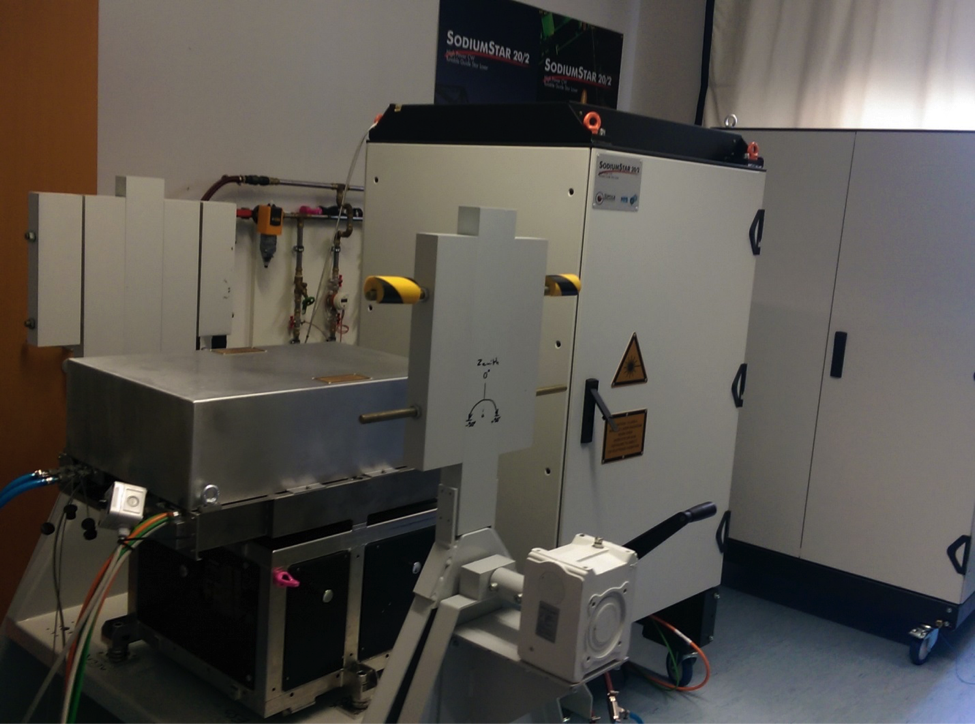
| Figure 1. The laser system undergoing gravity testing at the factory. Laser head (left), electronics cabinet (middle), heat exchanger (right). |
The laser system itself is comprised of an electronics cabinet, a heat exchanger and a laser head (Fig. 1). Fibers are run between the electronics cabinet and the laser head, allowing the electronics to be located in a non-varying gravity vector with only the smaller laser head on the elevation ring. To house the electronics cabinet and the heat exchanger, a new platform will be installed under the existing right Nasmyth platform. The laser head, along with an optics bench for steering of the beam, are co-located on a mechanical frame which will be bolted to the side of the elevation ring. This frame is designed to attach to the same pads as the existing dye amplifier table, to simplify and expedite the integration. The integration of the platform, cooling and power infrastructures, a new safety system, beam steering system, and software will be completed and tested during semester 2015A. All of the major components are designed for future upgrades to support three lasers. During semester 2015B, the laser head structure and remaining subsystems will be installed and integrated, followed by eight nights of engineering prior to shared-risk science.
This project brings state of the art laser technology to the current LGS science operation, will be compatible with the future generations of LGSAO systems at Keck, and will allow Keck to keep its leading position in LGS-AO science well into the future. ✶
MOSFIRE Data Reduction Pipeline at WMKO
Luca Rizzi, Support Astronomer, WMKO
New instruments, new observing modes, and new communities joining the Keck Observatory continuously challenge the Observing Support team to provide observers with the best possible tools to achieve world-leading scientific results. Over the course of the last decade, the astronomical community has demonstrated that data reduction pipelines (DRPs) can dramatically increase the productivity of a telescope, and many leading observatories have directed their efforts in this direction.
Following the successful example of the OSIRIS DRP, the WMKO is expanding its level of support in the field of data reduction by transferring the responsibility for the MOSFIRE DRP from the original development team (Chuck Steidel, Nick Konidaris, et al.) to the Support Astronomer team. Thanks to the effort of the original developers, the MOSFIRE DRP has become an important tool for MOSFIRE observers, who have adopted it enthusiastically and provided vital feedback for its improvement. Under the new model, observers will see changes in three major areas: distribution, support, and development.
Distribution
To access and download the pipeline, a link is provided in the general MOSFIRE webpages at Keck. Once on the MOSFIRE home page, observers can follow the link to “Post-Observing” and then “DRP”. The link points to the download page for the GitHub repository. Observers can download either a tar or zip file of the latest released version. Expert users can clone the current repository, which is to be considered experimental and unsupported. The latest release of the WMKO version of the pipeline is 1.1, and it has been downloaded 20 times at the time of writing.Support
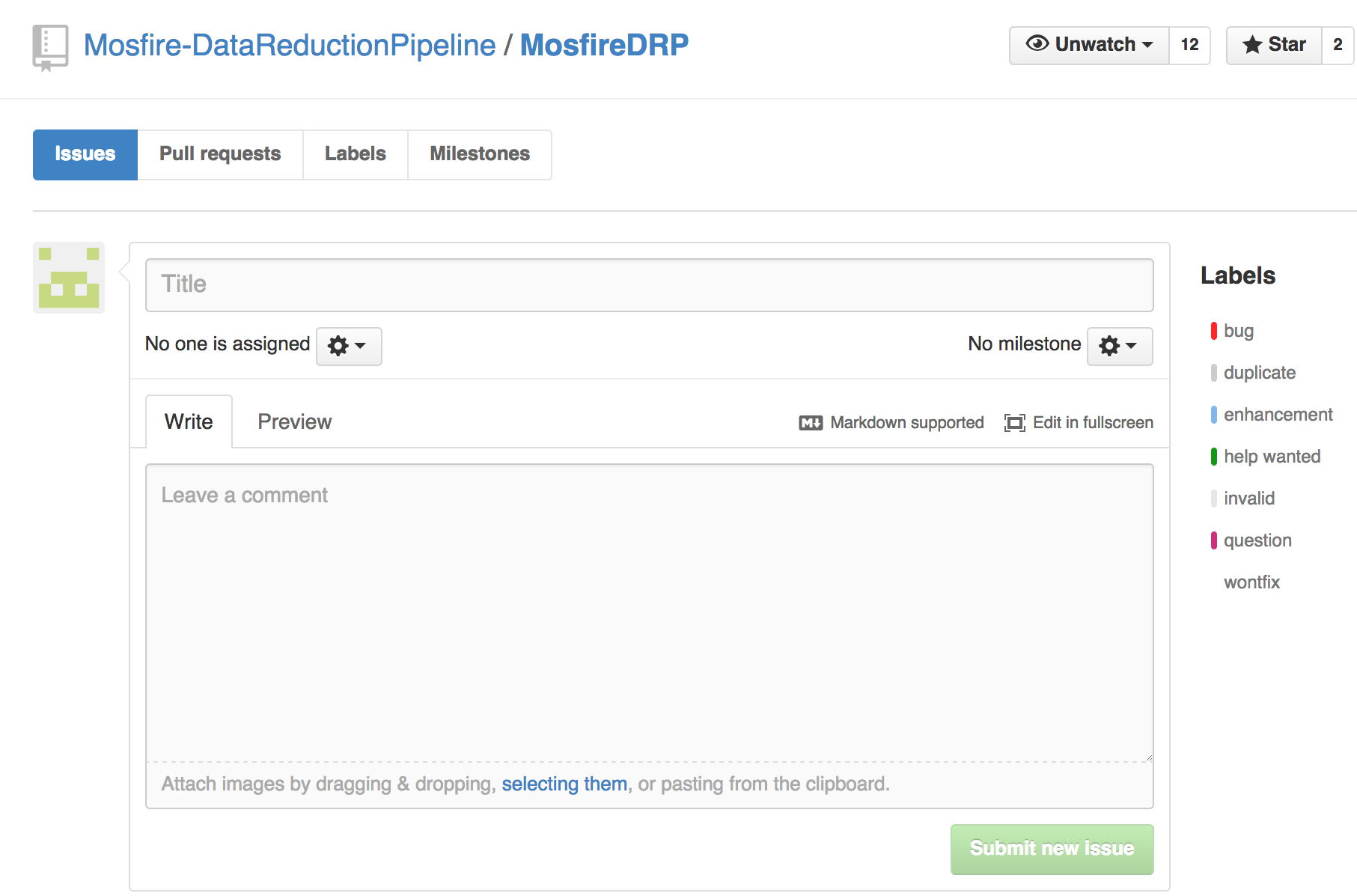
Support for installation and use of the pipeline is offered via two channels. For users who are willing to create a free GitHub account, we have created an issue tracking page (Fig. 2), which allows user to submit a description of the problem and attach files of any type, including FITS files, screenshots or any other relevant image. When a ticket is submitted, all the members of the development team are alerted and can decide to provide support, by assigning the ticket to the themselves. Users who submitted tickets will receive email notification of any response, and from that moment they can choose to either go back to the website, or just reply to the email. The website automatically keeps the email traffic and the issue tracking page synchronized. So far we have received 6 requests for assistance and we have been able to successfully resolve 5 of them, leaving the 6th as a future development of the pipeline. We are also tracking 4 suggestions for changes or improvements.
|
| Figure 2. The MOSFIRE issue tracking page hosted at GitHub. |
Development
The transfer of responsibility for the pipeline from the MOSFIRE development team to WMKO has led to the establishment of a new model for future pipeline developments. While the main responsibility for development rests on the Observing Support team, with Support Astronomers Luca Rizzi and Marc Kassis leading the effort, the original development team and other members of the observers’ community have agreed to continue to provide their valuable expertise and time. This is why the pipeline uses GitHub, one of the best systems for distributed software development.A core group of developers has been created, including Luca Rizzi, Marc Kassis, Shui Kwok from WMKO, Chuck Steidel and Nick Konidaris at Caltech, and Tuan Do at UCLA. In addition, any GitHub user can clone the repository and submit contributions to the core developers for review. While this scheme is still in its infancy, it has already sparked a number of lively discussions among the development team members on specific issues and on the future directions of the pipeline.
Future directions
We plan to release new versions on a quarterly schedule. Besides bug fixes and updates to the manual, the two most pressing issues that require our attention are long slit and long2pos reductions. We hope to have a version released for both these observing modes by April 2015.The MOSFIRE pipeline team encourages observers to download the pipeline, test it, and provide feedback, so that we can make it more effective and eliminate problems. We encourage observers to use the issue tracking page to submit their requests, and to look at those pages to see if an issue has already been discussed and, hopefully, resolved. While this is a relatively new experiment for our Observing Support team, we hope to provide quick and useful answers and to constantly improve this important tool. ✶
Upgrades To The Remote Observing Rooms
Marc Kassis, Support Astronomer, WMKO
During the 2015A semester, observers who frequent the Kohala remote observing facilities at the Keck Observatory will notice incremental changes as we modernize the room to better accommodate the needs of our observing community, staff, and our friends of Keck. In recent years, remote ops usage has increased significantly: Observing Assistants (OAs) now run one of the telescopes from headquarters almost every night, Support Astronomers may be supporting up to two laser systems, and outreach activities either during the day or at night provide friends of Keck a glimpse of observatory activities.
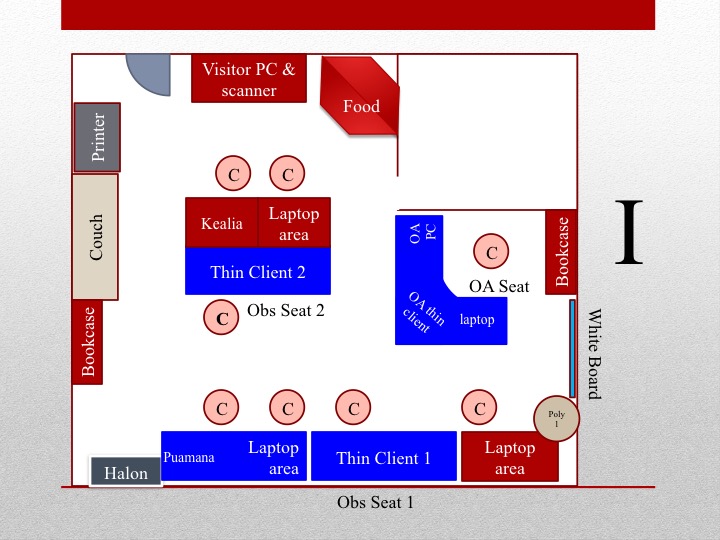
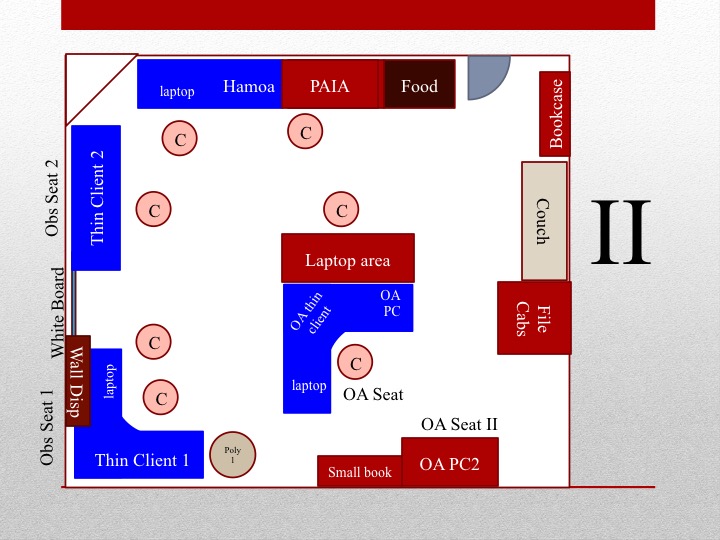
The upgrades to remote ops I and II will include:
- New “thin client” computers for controlling instrument software
- Removal of outdated, noisy and unused Solaris workstations
- New floor plans that relocate desks, polycoms, and observing seats
- Ergonomic hydraulic desks that will accommodate observers and staff who would like to stand for a portion of the night
- Designated observer laptop areas with charging stations
- Chairs designed for more than 12 hour of daily use
By the beginning of March we will have converted all the observer instrument display seats to thin clients. The sleek thin clients run a Linux OS that is a suitable replacement for our aging Solaris machines. Because the instrument software is now exclusively run inside Virtual Network Computing (VNC) desktops, just like our mainland sites, the thin clients are simply used to launch VNC sessions and internet browsers to access the instrument software and on-line documentation. The thin clients provide a stand-alone pre-configured hardware that is easily swappable, quiet, light-weight for our new desks, and cost-effective.
While the thin clients are a subtle change, observers will also notice that the new thin clients are equipped with four high-resolution (1920 x 1080) 24-inch monitors. With these new screens, we will eventually increase the size of the VNC servers used for instrument software to give you more virtual screen real estate whether you observe from Waimea or one of our mainland observing sites (we must coordinate screen size between HQ and mainland sites). With four displays, the thin clients are not only configured to run both the instrument control and analysis VNC screens, but also the telescope status and analysis display screens, eliminating the need for a second computer (the old secondary seat). This further frees desk space in the remote observing rooms, which can be used for observer laptops, for example.
Starting in 2015A, the OAs will regularly run one telescope from either remote observing rooms I or II. In addition to reducing observatory costs, having the OAs at headquarters provides an opportunity for improved communications with the observing teams and support astronomers. To relieve congestion with certain workstations, the new remote oberving rooms floor plans designate an area that is specifically intended for OA use only. The updated floor plans will be completed by May 2015 and will provide more viewing access to the primary and secondary observing seats making it easier for support astronomers to instruct larger observing teams and providing better access for nighttime tours. This will also benefit split nights when multiple teams using multiple instruments would like to acquire calibrations in the afternoon.
Other floor plan advantages include:
- The OA seat, observer seats, and couch areas are under separate lighting banks, allowing different light levels to be set for each party
- The OA has a view of the primary observing seat for better communication and support
- The whiteboard is more accessible and is more easily viewed from the primary observing seat
- The partition is removed from remote ops II to open up the observing areas
We sincerely hope that this effort will result in a better overall observing experience, both in terms of productivity and comfort.
|
|
| Figure 3. Floor plans for remote ops rooms I and II. Blue desks are adjustable in height. Red desks are not adjustable in height. Eight chairs labeled “C” will be available in each room. ✶ |
Observing Tips: Pointing And Tracking Limits
Heather Hershley, Observing Assistant, WMKO
|
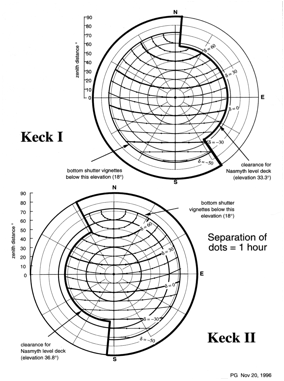
| Figure 4. Telescope limits chart. |
While both Keck I and Keck II have been constructed similarly enough to be often referred to as “twins,” much like actual twins there are subtle differences. Among them, pointing limits for one telescope do not translate to the other, which can lead to the inability to access targets at the expected time. With the right information, it is a simple mistake to avoid, but it can occasionally be overlooked in planning an observing run, especially for newer users. The purpose of this article is to explain the observing limits of both telescopes. You can find a link to the Limits Chart (Figure 4) on the “Planning Your Observing Program” webpage.
The Nasmyth deck, usually referred to as Nasdeck, is the main reason behind these limits. In each telescope, this metal structure is located on the side of the dome which is connected to the central building. This is from azimuth ~6° to 146° on Keck I and azimuth ~185° to 332° on Keck II. The deck is the main access point to the telescope via the Cassegrain and Nasymth platforms, and provides storage for the Cassegrain and Nasmyth instruments not currently in use, the tertiary tower, and secondary cells. These functions require it to be high enough to interface with the Cassegrain focus on each telescope. When considering each Nasdeck, objects become observable later on Keck I (at 33.3° elevation) and fall below the limit earlier on Keck II (at 36.8° elevation). The “time until limit” depends on the declination of the target, of course. Very high or low declination objects can be particularly affected given their low elevations at transit: the object may transit soon after rising on Keck I if it is over δ ~60° and set soon after transit on Keck II if it is below δ ~ -30°.
Another consideration is the dome structure itself. For azimuth ranges not affected by the Nasdeck, the formal pointing limit is the horizon, but the bottom shutter starts to vignette at elevations lower than 18°.
The final factor to consider in determining the pointing limits is the instrinsic contruction of the telescope: in fact, both telescopes are alt-az, meaning that the telescopes must slew rapidly in azimuth to keep up with high-elevation transiting objects. The maximum tracking speed is reached around 84° elevation on Keck I and 86° elevation on Keck II. Regions above those elevations are often referred to as “keyholes”. Slewing to “keyhole” targets just after transit is advisable if the observation requires being as close to 1 airmass as possible. If in doubt, check with your Observing Assistant or Support Astronomer, as they often have a good idea of when guiding issues begin on particular instruments during transit.
As a reminder, to see rise times and transit elevations, right click on a starlist loaded in MAGIQ and select “Immediate Starlist Plot,” and a graph will pop up showing the airmass, time, and elevations of all targets for the current UT date. ✶
DEIMOS Servicing Mission
Luca Rizzi, Support Astronomer, WMKO
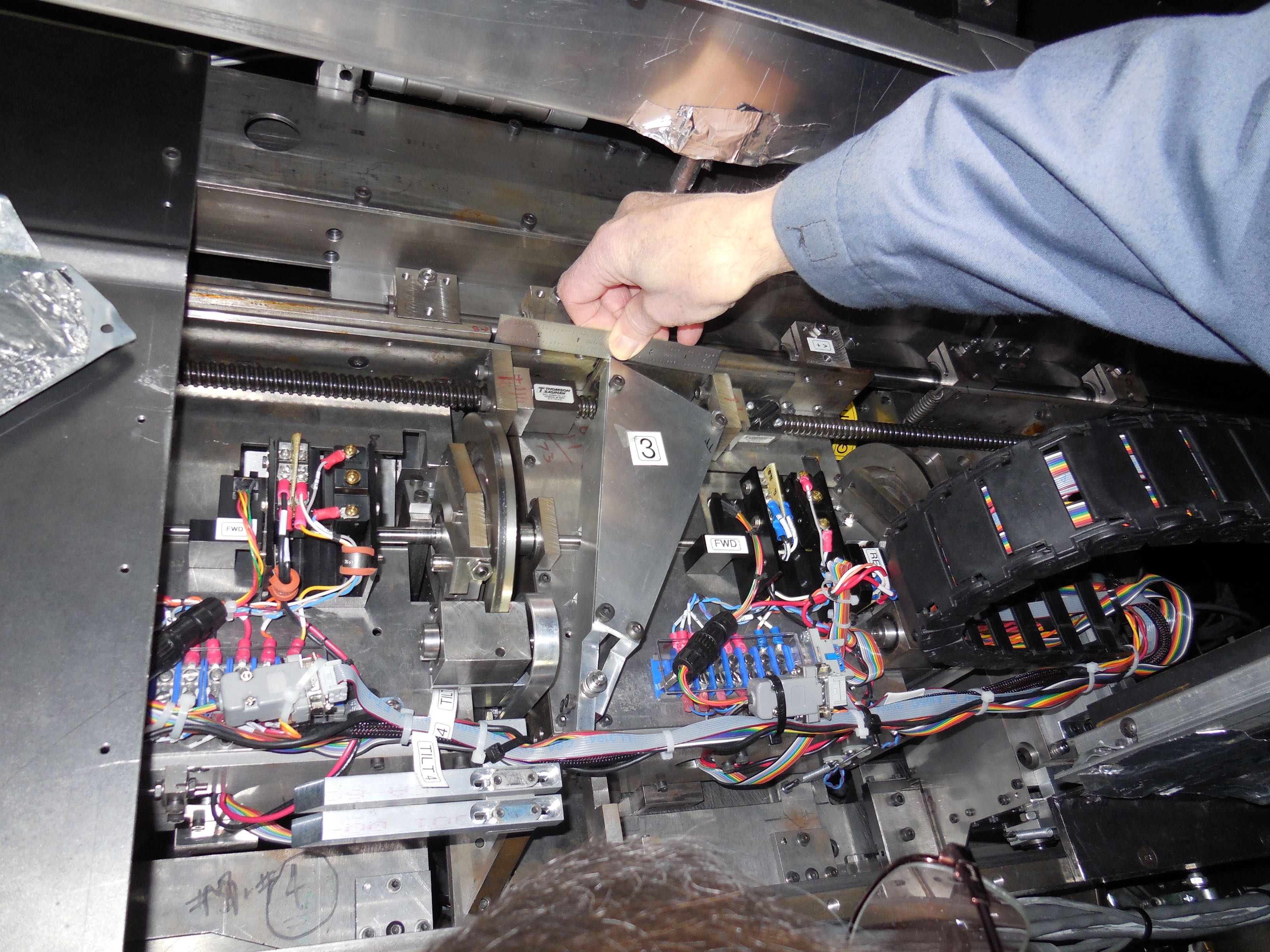
As we reported in our previous Newsletter, the DEIMOS servicing mission was carried out between January 19th and January 30th, in collaboration with our colleagues at the University of California Observatories (UCO). UCO Instrument Lab Manager Dave Cowley and Principal Laboratory Mechanician Jim Ward arrived in Hawaii on January 18, and tirelessly travelled to the summit every day accompanied by our Instrument Engineers Steve Milner and Dwight Chan, Instrument Technicians Nick Suominen and Gary Anderson, and Support Astronomer Luca Rizzi. Software support was provided at UCO by the Scientific Programming Group: Supervisor Will Deich, Programmer Steve Allen, and (retired) Research Astronomer Bob Kibrick. Coordination and supervision was guaranteed by UCO Associate Research Astronomer Brad Holden, and continuous assistance from the Waimea Headquarters and supervision of the computer upgrades was provided by DEIMOS Instrument Master Marc Kassis. Figure 5 shows the grating assembly and gives an idea of how complex this mechamism is.
|
| Figure 5. The grating slider mechanism. Jim Ward is measuring the distance between slider 3 and slider 4 on the lead screw, before disassembly. |
The main goals of the mission were to solve a number of outstanding problems that had plagued DEIMOS during the last 2 years: excessive flexure of the grating assemlby, unreliable positioning of the grating tilts, and various failures of parts associated with the grating assembly. We wanted to perform a number of preventive maintenance tasks that require major disassembly. Finally, we wanted to replace the aging motion control computers with newer, faster and more reliable equipment.
The mission started with the disassembly of the grating mechanism, followed by the removal of sliders 3 and 4 to the summit instrument lab. The two sliders were then entirely disassembled, and critical parts were replaced. The main parts that were replaced are: the metal-on-metal gears that drive the tilt mechanism, all the motors, all the bearings and shafts, and the encoders. While Dave and Jim worked on the sliders, our summit crew replaced the pneumatic clamps that hold the sliders in place. Figures 6 and 7 show the kind of wear and tear that we observed in some of the gears and bearings.
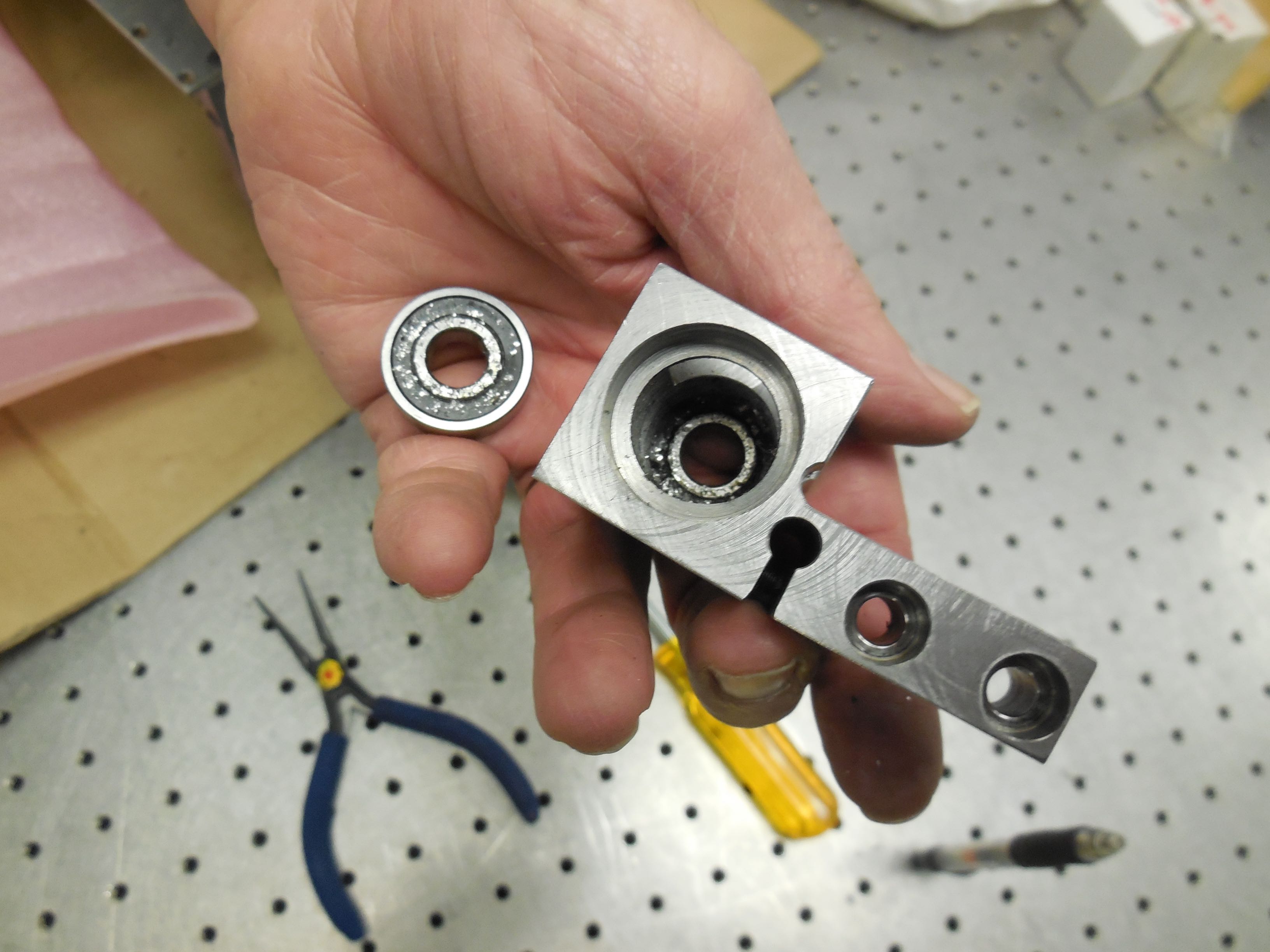
|
| Figure 6. Badly damaged bearings of the tilt mechanism shaft. |
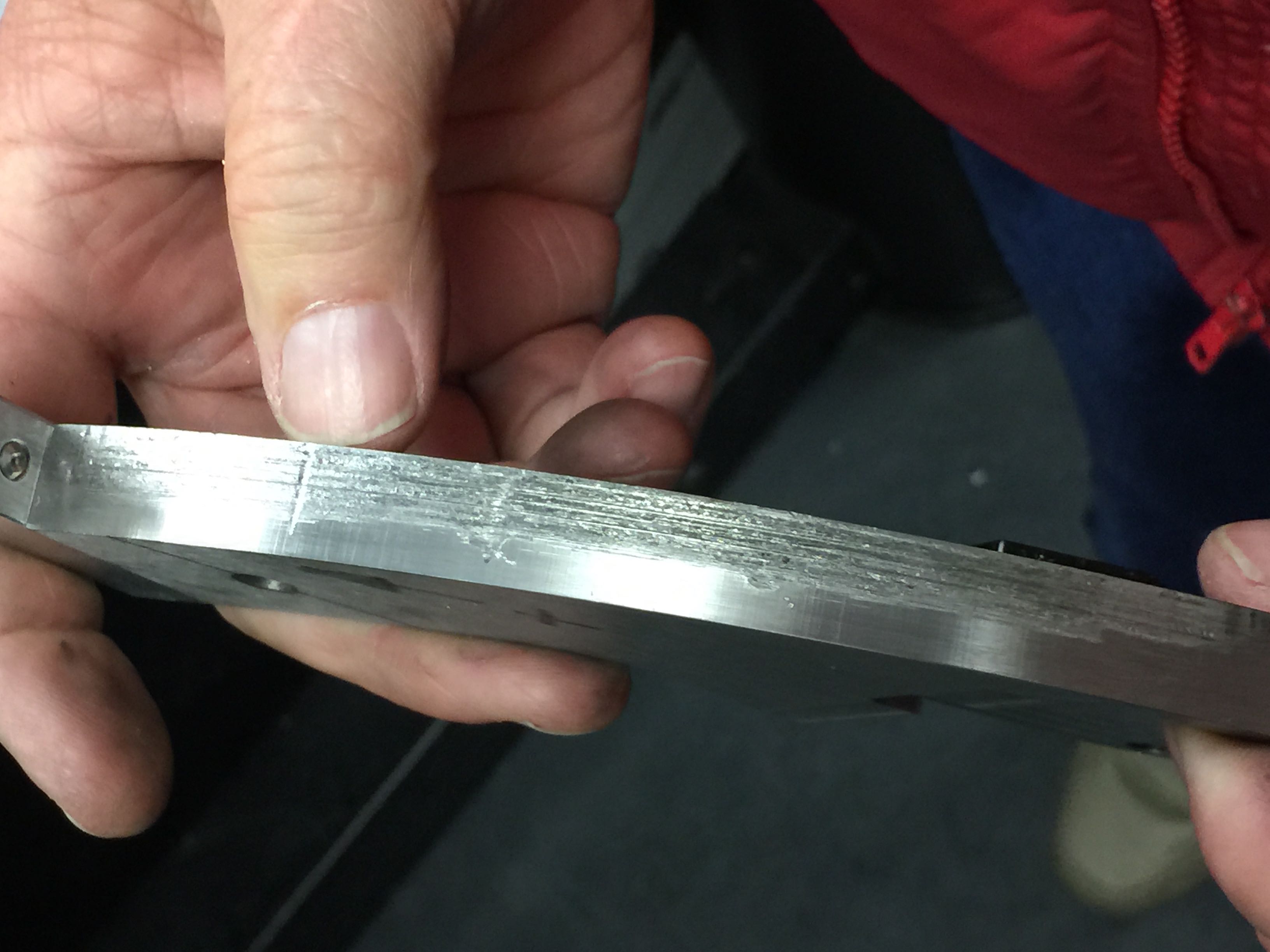
|
| Figure 7. Main driving arc of the tilt mechanism, with scouring marks and deep dents resulting from slippage of the driving gear. |
During the second week, we reassembled the sliders and re-installed them on DEIMOS, and then proceeded to recalibrate the clamping mechanism and the tilt stages. Finally, we proceeded to re-establish motion control by establishing new homing sequences and new encoder calibrations. In parallel, the old motion control computer (keamano) was replaced by a new one, and the software was updated. At the time of writing, we are fine-tuning the clamping and tilt mechanisms, and we are in the process of charachterizing the new mechanical properties of the slider assembly. Tests on slider 3 show a largely reduced flexure, and the tilt mechanism has been extremely reliable. The final results of the testing will be published on the DEIMOS web pages.
I would like to express my gratitude to all the people involved in this complex operation, the first of its kind performed on DEIMOS since it was commissioned in 2002. We hope that we have been able to restore this instrument to its pristine state, and that it will continue to produce ground-breaking science for years to come. ✶
TRICK Update
Jim Lyke, Support Astronomer, WMKO
The Near-Infrared Tip-Tilt Sensor on Keck I (or TRICK) is still undergoing commissioning (as of February 2015), but we expect it to be available for shared-risk use towards the end of 2015A and into 2015B. An overview of TRICK was presented in the Winter 2014 edition of the Observers’ Newsletter. The primary benefit of TRICK is improved tip-tilt correction as the tip-tilt star will be partially AO-corrected. Because tip-tilt performance improves the closer an object is to its tip-tilt star, an additional benefit of TRICK is that red objects may act as their own tip-tilt star. Observers will still need a visible tip-tilt star for the low-bandwidth wavefront sensor (LBWFS) and there will be new keyword=value pairs required in starlists. As TRICK moves closer to deployment we will update the “How-to” webpages for AO. ✶
Aloha Greg Wirth
Jim Lyke, Support Astronomer, WMKO
It is with great sadness that we announce that Support Astronomer Greg Wirth, who joined the Keck Observatory almost 17 years ago, has resigned his position. As the first and only DEIMOS instrument master, he shepherded the multi-object spectrometer through commissioning and oversaw DEIMOS’ very productive use at Keck. His scripting prowess is legendary: authoring or modifying thousands of scripts that made observing as efficient as possible, he earned the moniker “code master” from his fellow SAs. Greg also led the effort to make mainland observing the reliable operation that it is now and he was a driving force in some of the most important scientific achievements of Team Keck, using Director’s nights for a redshift survey of the GOODS-N field with DEIMOS (TKRS) and then MOSFIRE (TKRS2). Last but not least, he has been a generous and patient mentor for new SAs. Among his many passions was sharing his enthusiasm for astronomy through outreach to Hawaii Island’s students from preschool to college. Outside of work, Greg could be found most Fridays playing ultimate Frisbee in the park and spending time with his wife Tina and his children Amelia, Eli, and Mazie.
Greg’s expertise, depth of knowledge and dedication will be sorely missed, as will the welcoming smile he graciously offered to anybody knocking at his office door. We wish Greg and his family the best in their new adventure in Colorado, where Greg is a senior scientist with NEON (National Ecological Observatory Network). Aloha and a hui hou!

|
| Greg Wirth at the Keck Science Meeting 2011. ✶ |
Back Issues
Please see the Keck Observers’ Newsletter Archive.