News Items
2026-05-10: KAPA Science Observing
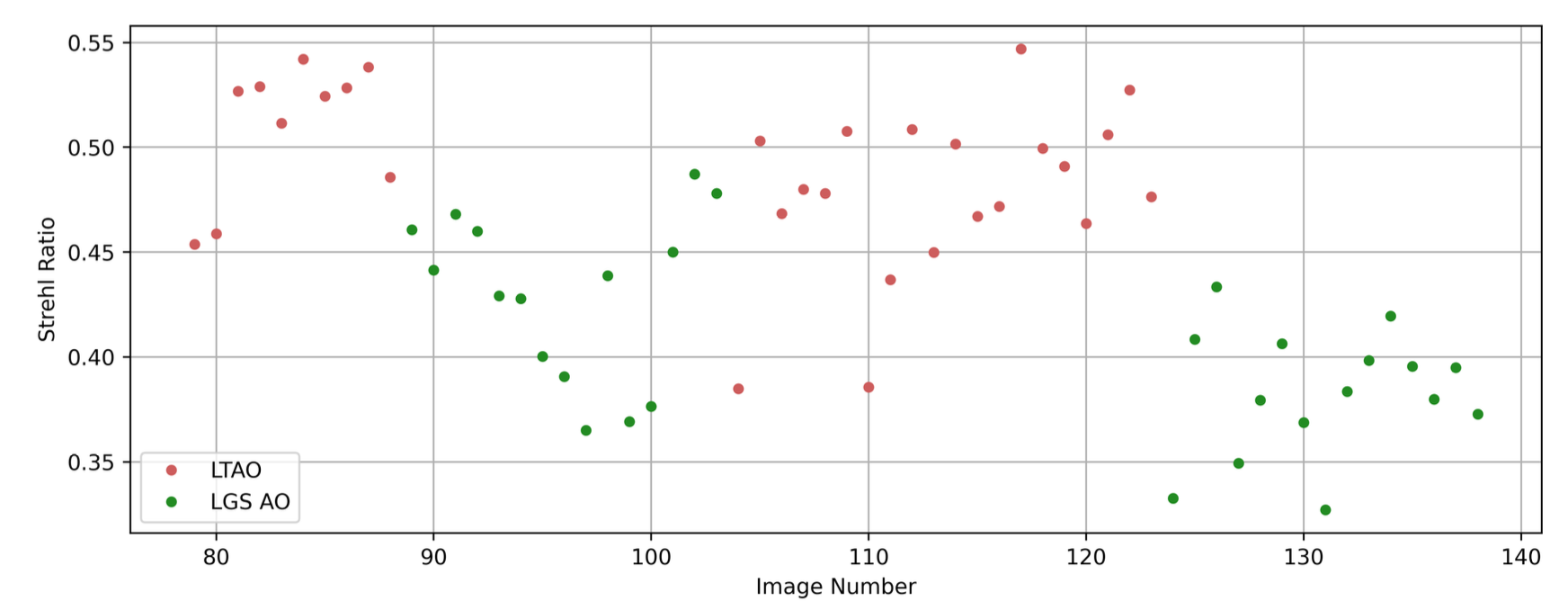
The initial phase of the KAPA commissioning and science verification has been completed and the results meet our expectations. However, this mode is not fully supported for regular night time operations. 2026A PIs could enquire about possible use of KAPA LTAO and/or KAPA GLAO for their LGS programs by sending an email to Antonin Bouchez (abouchez@keck.hawaii.edu) so that we can determine if these observations could be supported.
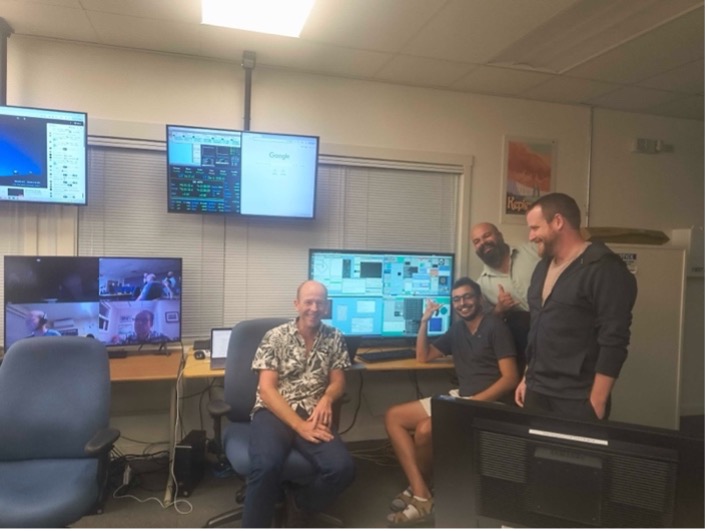
2026-03-28: HAKA First Closed Loop
We closed the HAKA control loops for the first time tonight! We had a frustrating first HAKA engineering night on Wednesday due to a critical system stage failure mere hours before going on-sky. Tonight went much differently. The team worked long hours at the summit and at HQ to recover the system and get ready for the next attempt.
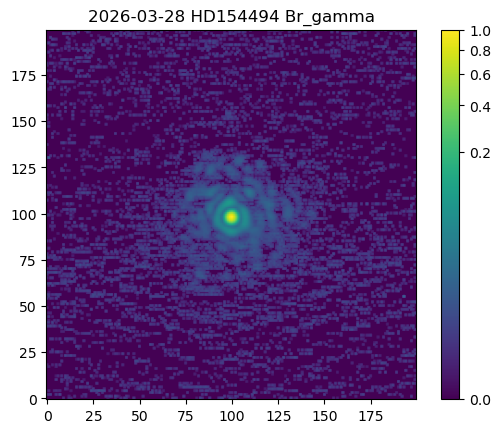
The result: HAKA delivered excellent adaptive optics performance! Using HAKA's high-order (HO) mode, we achieved K-band Strehl ratios exceeding 55% in 0.65 arcsecond K-band seeing surpassing what we would expect from the previous Xinetics system in those same conditions. This is a meaningful leap in image sharpness and system capability.
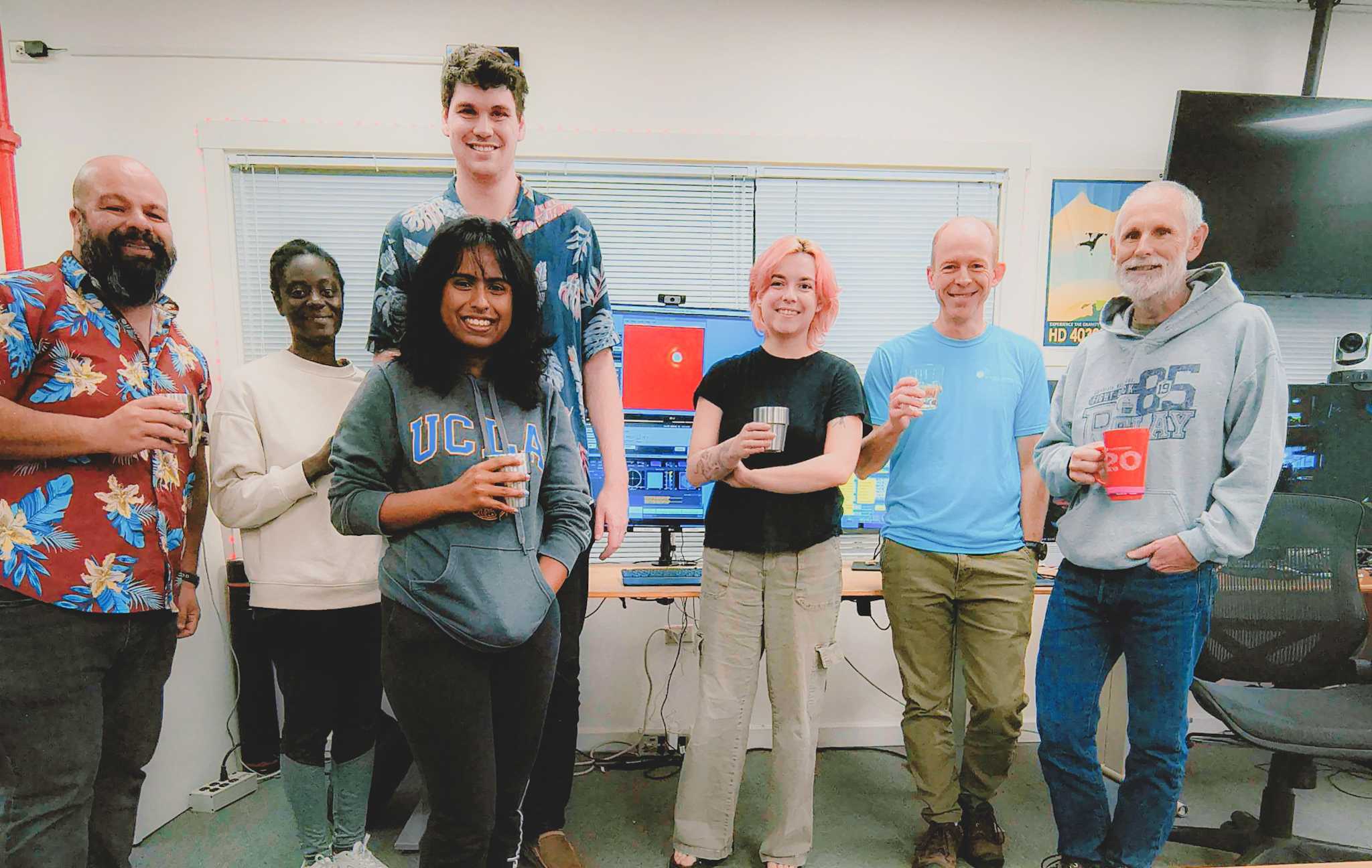
This result is the product of years of hard work by a dedicated team, and it marks a real milestone for the observatory. A big mahalo to everyone involved, on the summit, at HQ, at our partners, and behind the scenes. We've included a photo of the team from tonight, acknowledging that not everyone who made this possible could be there, along with an image of a bright star taken with HAKA.
There's still a lot of work ahead, more commissioning, more tuning, and plenty of late nights, but tonight reminded us why we do it. Nights like this one make it all worth it.
2026-02-02: HAKA upgrade is underway
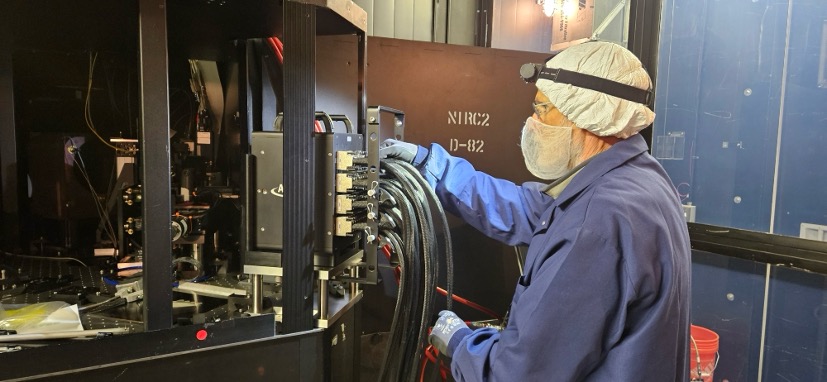
The HAKA upgrade to Keck II began on 2 February, with the transportation of the 2844-actuator ALPAO DM, electronics, and wavefront sensor components to the summit. K2AO will be unavailable for 16 weeks. Science observations with the upgraded K2AO resume on 23 May.
2026-02-01: Fast and Furious available on NIRC2
The Fast and Furious (F&F) image sharpening algorithm is available for use with NIRC2. It is implemented as a Python software tool run on the AO server that records a sequence of 30 images to optimize the time-averaged PSF. It takes ~5 minutes to converge for a bright star, and typically increases the K Strehl by 10% (relative) by compensating non-common path aberrations and wavefront sensor aliasing errors. The applied correction is a function of pupil angle, so F&F is most effective if observing in Vertical Angle mode. The correction will persist in Position Angle mode as long as the pupil angle varies by <10 deg.
2026-01-31: KAPA science verification begins
The first science verification observations are being performed tonight by the KAPA science team. Approximately half of the each engineering night in the next semester will be devoted to science observations in the four key science areas of KAPA:
The observations are being led by the KAPA Science Team, and the WMKO engineering time will supplemented by a 3-night proposal for science verification granted by the UC TAC. The first target observed tonight was the strongly lensed quasar J0607.

2025-12-04: KAPA LTAO First Light
Tonight we saw the first clear evidence of signficantly improved image quality enabled by the KAPA LTAO observing mode, with a K band Strehl improvement of ~20% relative to single laser LGS. This was enabled by the pseudo open-loop (POLC) laser tomography AO (LTAO) reconstructor tested for the first time tonight. Congratulations to the KAPA team!